
The artisans

The hands behind every piece

Eleven crafts, eleven living traditions. These are the workshops and the families behind every ARECA piece.

The Backstrap Loom

The Backstrap Loom

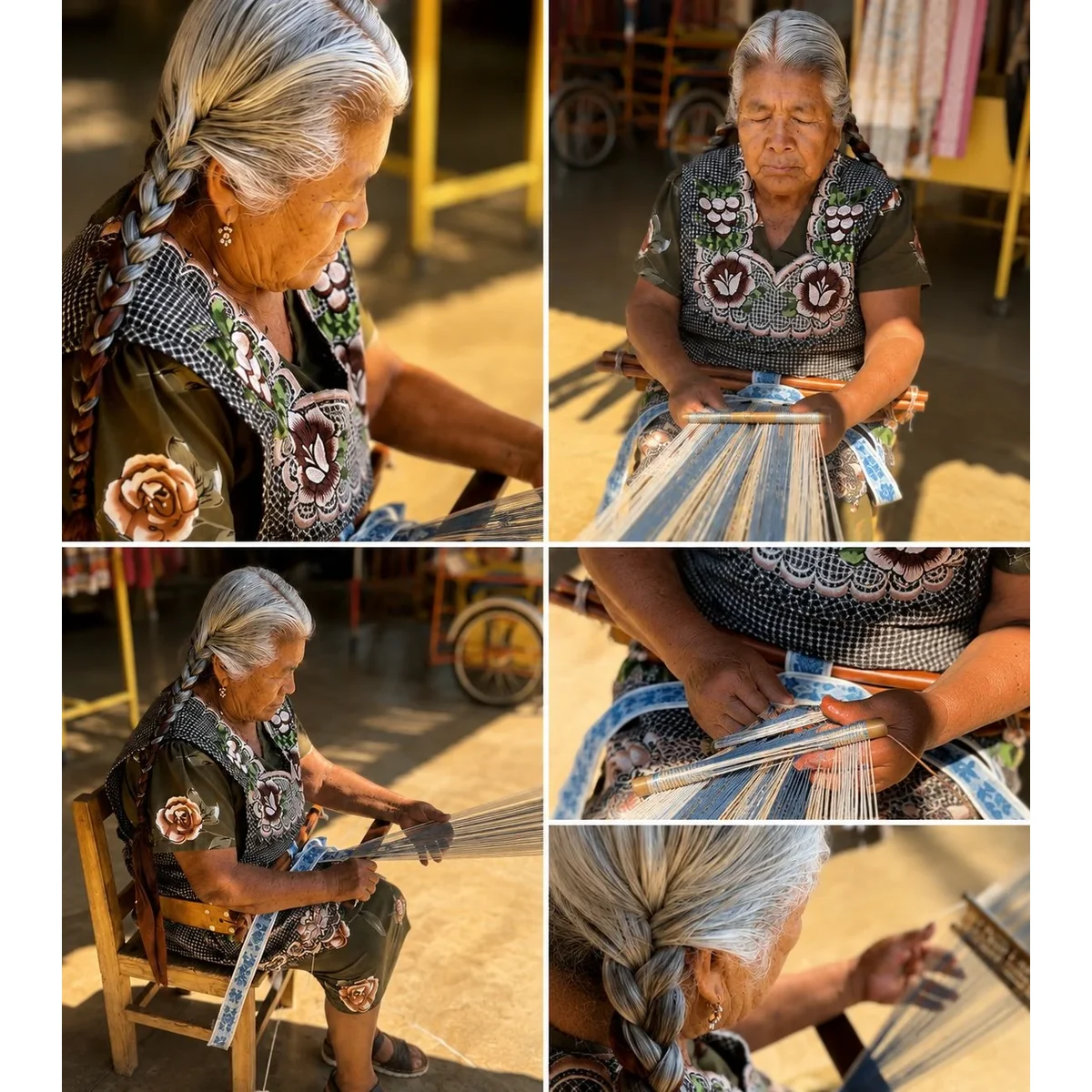
In a small village in Oaxaca, an ancient hand-weaving tradition has been kept alive for centuries: the backstrap loom, a technique in which the weaver ties the loom to her own body and controls the tension of every thread with her hands and her movements.

Xóchitl learned this craft as a child and has devoted her life to keeping it alive. Each piece is created slowly, thread by thread, entirely by hand, with a patience and a skill that only come after many years.

For us at ARECA, these pieces are much more than textiles or decoration. They carry the story of the woman who makes them, the knowledge passed between generations, and a part of Oaxaca's cultural richness.

When we bring one of these pieces into a home, we are not just bringing a beautiful object: we are helping a living tradition continue to tell its story.
Villages of Clay

Villages of Clay

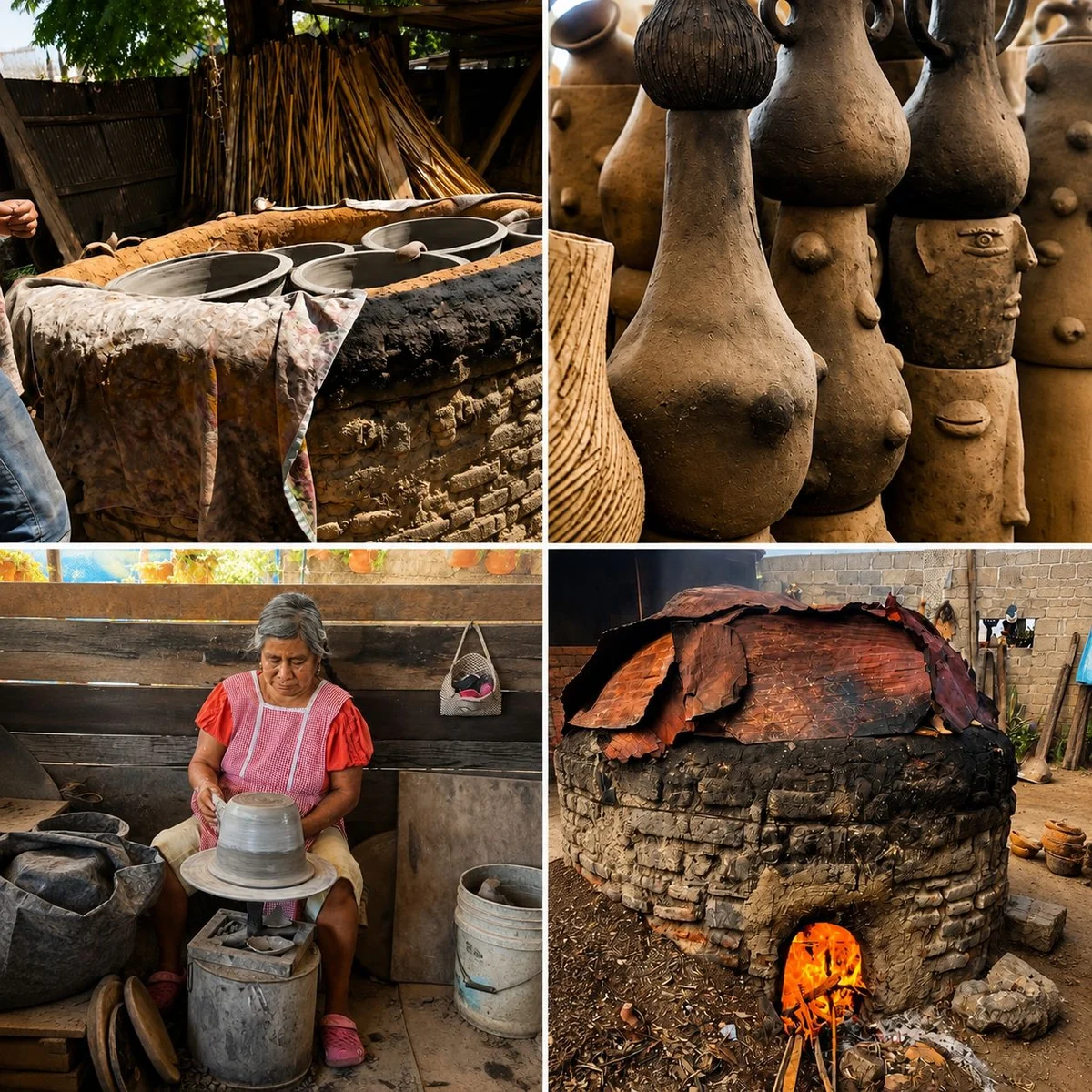
In Oaxaca there are villages where practically the whole community lives from working clay. Many homes have a small workshop, a kiln and a production space, and the whole family often takes part in the process.

Some families specialize in plates, others in cups, vessels, jars or sculptural pieces. Over the years each family develops its own language: a particular shape, a tone, a firing technique, a texture, details that become a true family signature.

Most special of all: this is not industrial production. Every piece is made by hand, so even two similar objects are never exactly alike. That small imperfection is precisely what gives them character, authenticity and value.

The tradition passes from generation to generation, but each family adds its own story. The whole village becomes a living mosaic of techniques, styles and unique artisanal expression.

Teotitlán del Valle

Teotitlán del Valle

In Teotitlán del Valle, Oaxaca, weaving is not just a trade: it is part of the identity of an entire town. The Zapotec textile tradition began long before the Spanish arrived; for centuries, native communities wove plant fibers on backstrap looms with knowledge handed down through generations.

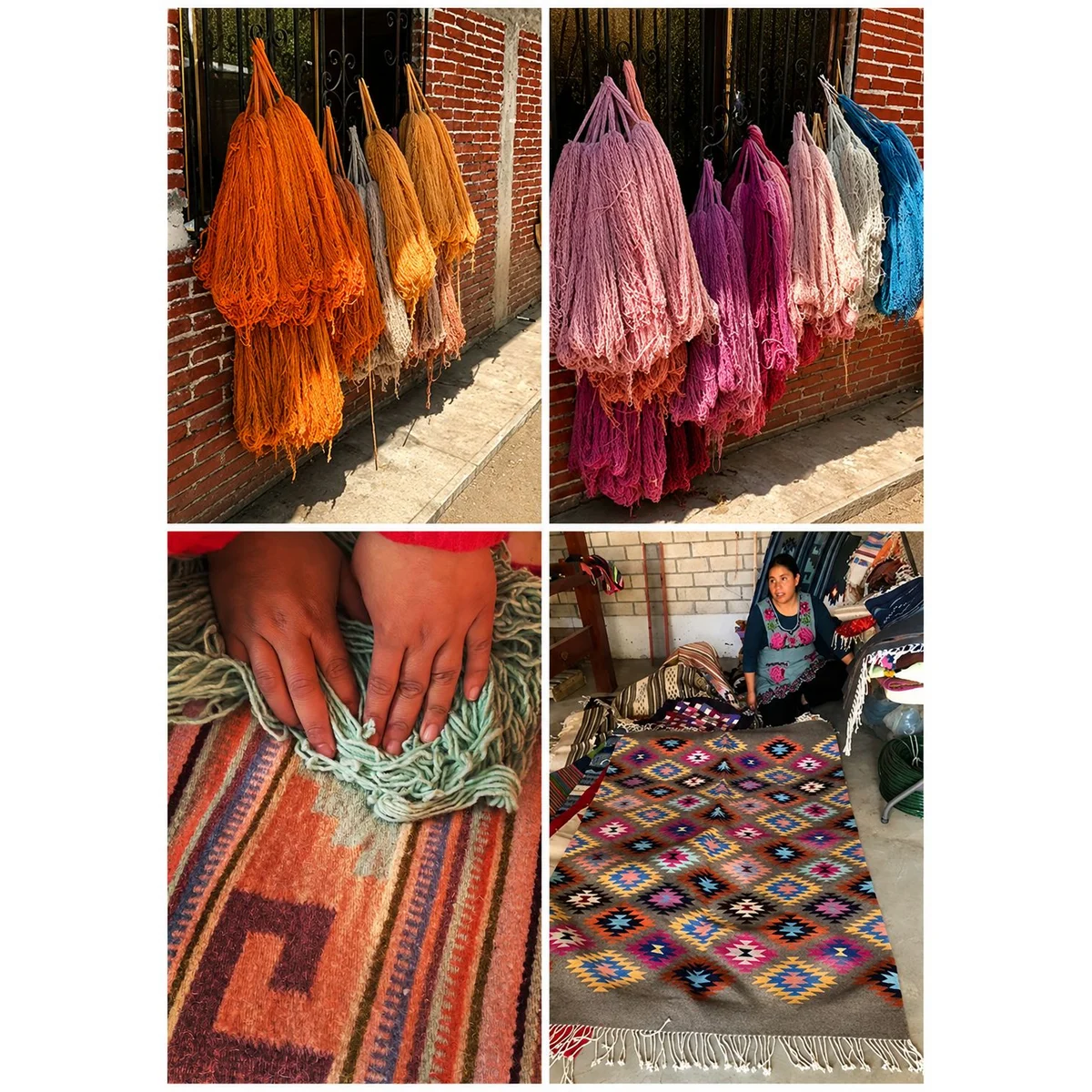
With the arrival of the Spanish in the 16th century came sheep's wool and new looms, giving rise to the wool rug tradition that distinguishes Teotitlán del Valle today. Walking through the town means entering a world where entire families work together: wool is carded, spun, dyed and finally woven by hand under the same roof.

One of the most fascinating parts of the process is color. Many artisans still use natural dyes from plants, fruits, minerals and the cochineal insect that lives on the nopal cactus, the source of intense reds, pinks and purples, alongside naturally made yellows, ochres and greens.

Each family has its own way of working, its color combinations, its patterns and small secrets. Every rug carries the story of a family and a living culture. For ARECA, visiting Teotitlán means returning to the origin of things: meeting the hands that make them and understanding the time each piece requires.

Vidrio Soplado

Vidrio Soplado

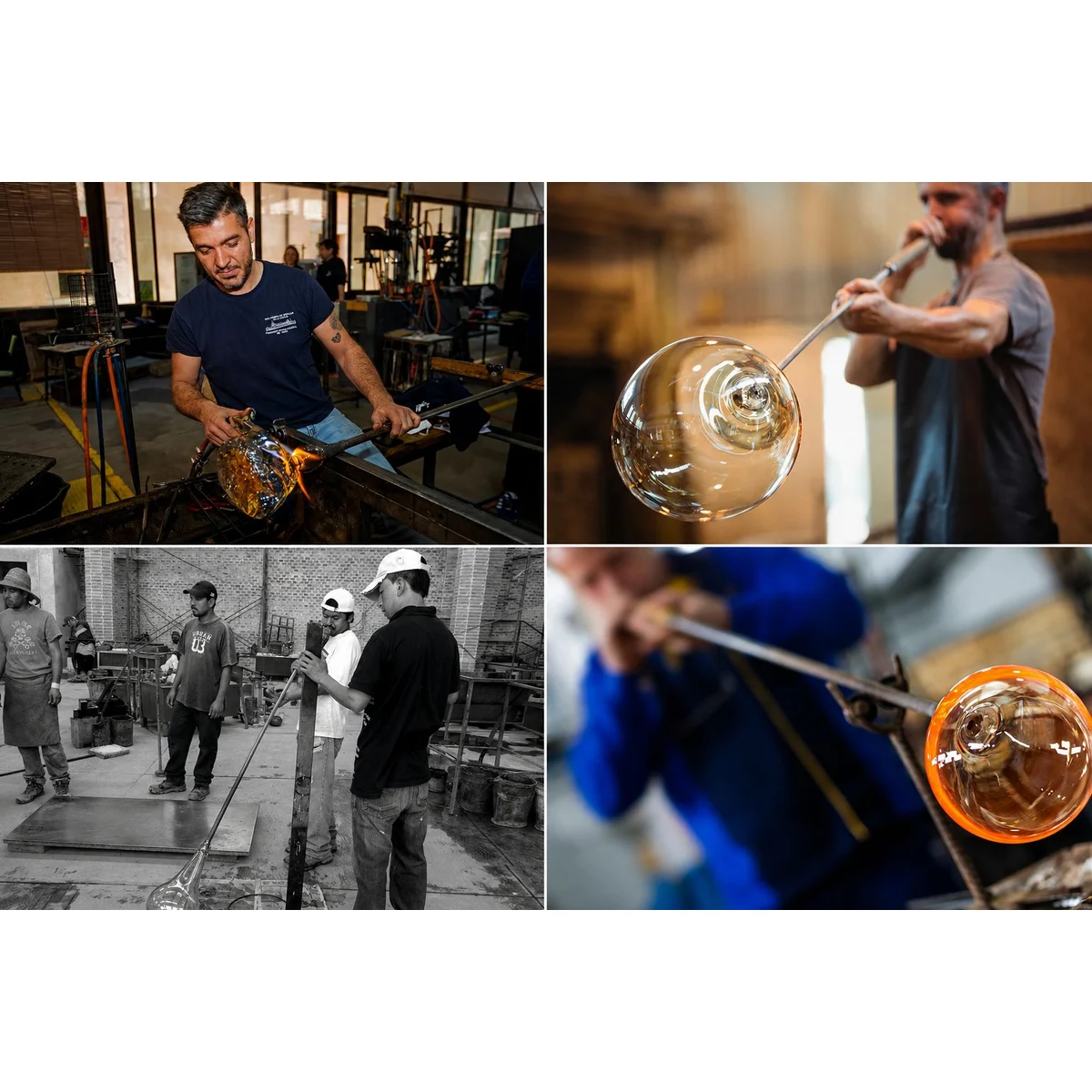
Mexican blown glass is one of the country's most distinctive artisan traditions: an ancient European glassmaking technique transformed by Mexican craftsmanship, color, improvisation and a long habit of reusing materials. The first documented glass furnace in the Americas was lit in Puebla in 1542.

The process remains physical and direct. Recycled glass, bottles, jars, discarded pieces, melts in a furnace at around 1,200°C. The artisan gathers the molten glass on a long blowpipe and, turning and blowing, shapes a bubble using gravity, simple tools and years of experience.

Because the work is done by hand, no two pieces are identical. Small bubbles, changes in thickness and subtle shifts of color are not defects: they are the character of handmade Mexican glass, with its unmistakable green, aqua and smoky tones born from recycled bottles.

Today the tradition lives at the crossroads of craft, art and sustainable design: from glasses and pitchers to oversized vessels, pendant lamps and sculptural pieces for homes and architecture. Fire, breath and the artisan's hand, turning discarded glass into objects that record their own making.

Tejido de Palma

Tejido de Palma

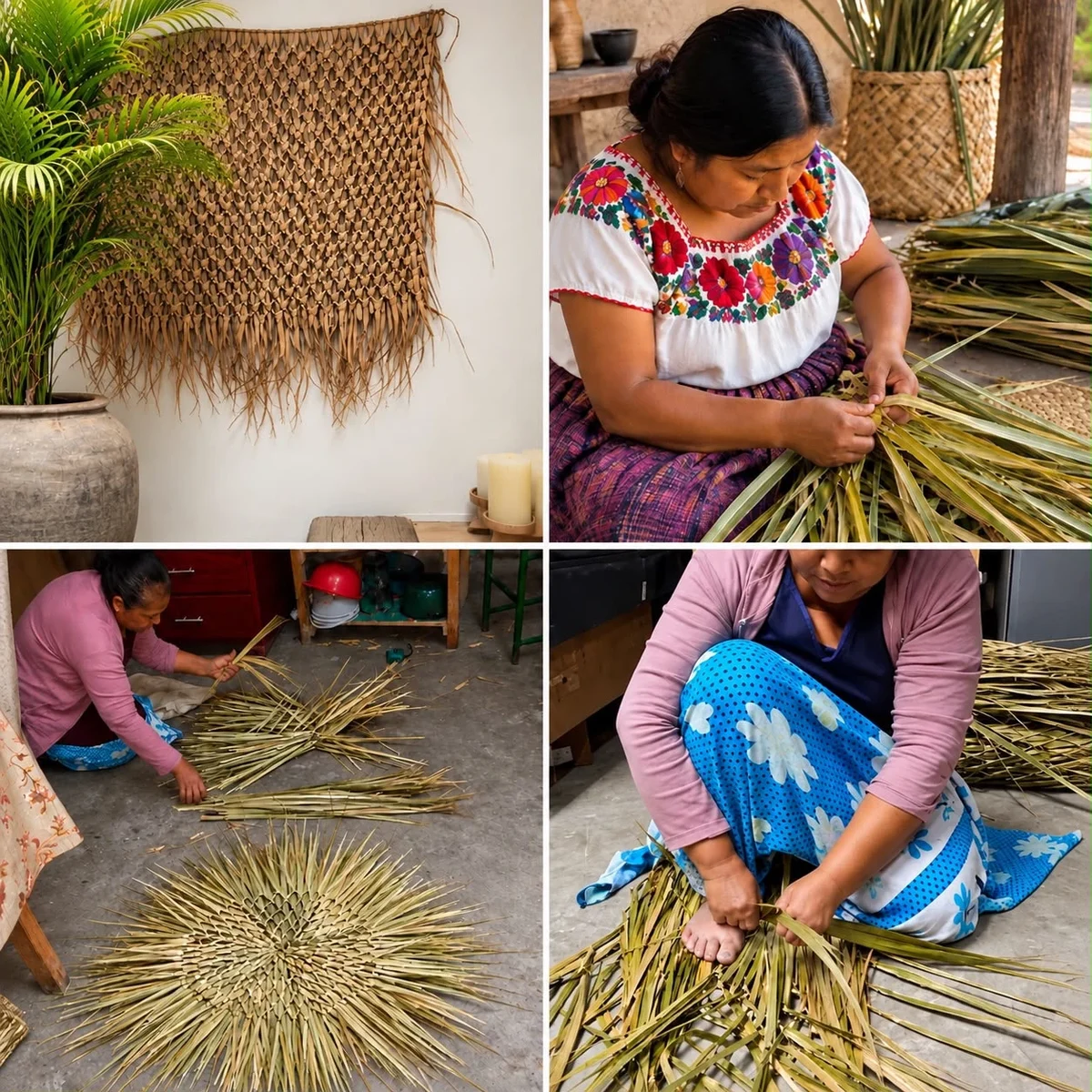
Palm weaving is one of Mexico's oldest fiber crafts. Long before the Spanish arrived, Indigenous communities were already turning palm leaves into objects for everyday life, petates, baskets, tenates, hats, fans and containers for carrying crops, and even dyeing the palm to weave patterns into the mats.

The process begins in the field: choosing and harvesting the right leaves. Depending on the region, they are dried, boiled, whitened, smoked, split into very fine strips or dyed before weaving. In Guerrero, artisans work with young leaves called velilla, boiled and dried until the fiber turns a pale natural tone, ready for the loom of the hands.

One of the great centers of this tradition is La Mixteca, spanning parts of Oaxaca, Guerrero and Puebla, where children begin learning to weave at around six years old. In Chilapa de Álvarez, Guerrero, palm is braided into strips and sewn into a true palm 'fabric', tortilla baskets, placemats, bags, flowers and decorative pieces. And in Bécal, Campeche, the famous jipi-japa hats are woven inside humid limestone caves, where the moisture keeps the ultra-fine fibers flexible; a single hat can take up to two weeks.

The irregularities of the leaf, differences in thickness, tone and texture, are not defects: they are what makes every handmade piece unique. Today, traditional objects live alongside contemporary wall pieces and home décor, but the essence is unchanged: a natural palm leaf, prepared by hand and transformed one strand at a time.

Piedra Volcánica

Piedra Volcánica

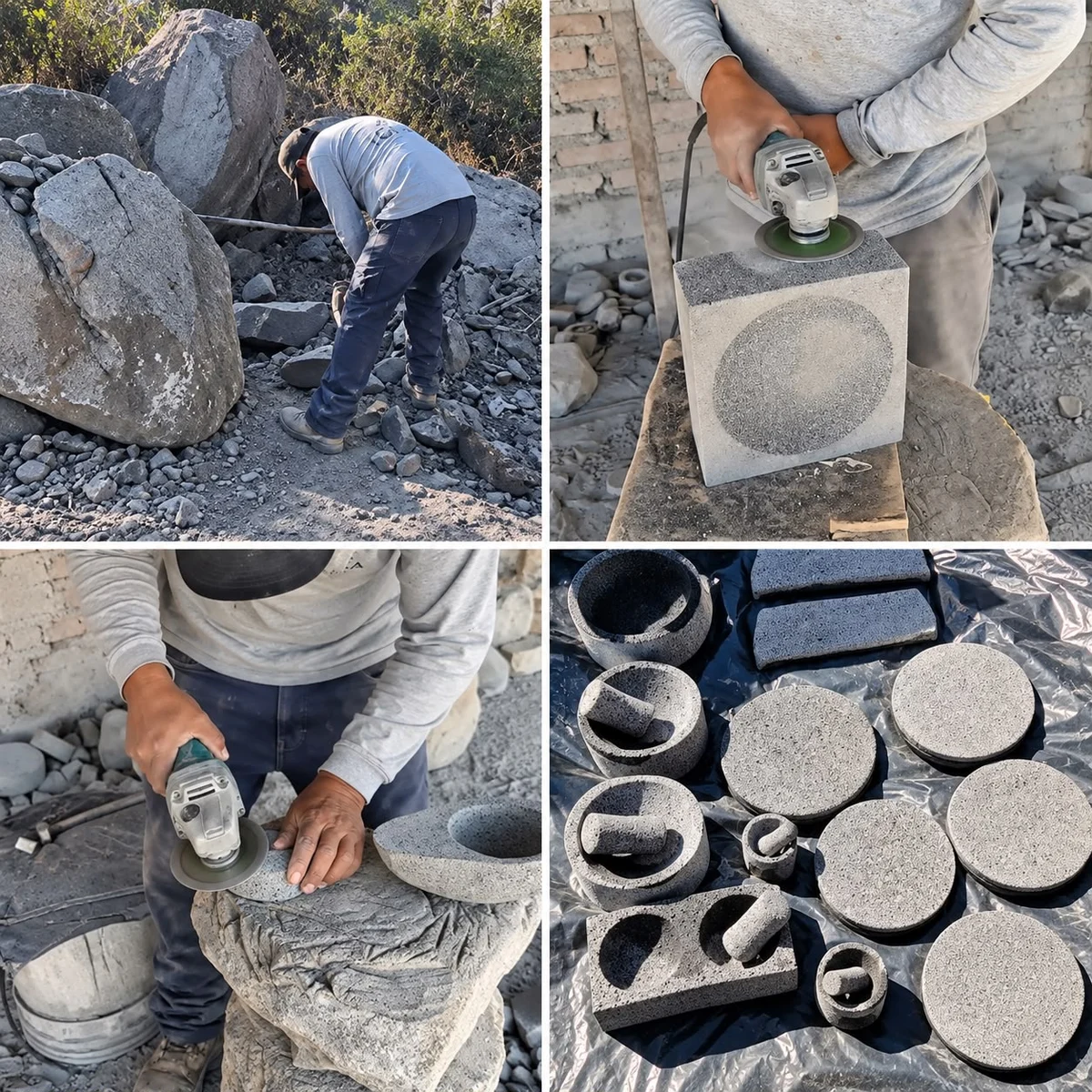
The carving of volcanic stone is one of Mexico's oldest living craft traditions. Born from the country's volcanic landscape, basalt has been shaped by Mexican hands for thousands of years, from the pre-Hispanic metate and molcajete, fundamental for grinding corn, chiles, seeds and herbs, to sculptural pieces for contemporary homes.

Artisans find the right stone in local deposits, break it into workable blocks and shape each piece with hammer, chisel and abrasion. Today ancestral knowledge lives alongside modern grinders and polishers, preserving the handmade character of the stone while allowing ever more refined designs.

The most recognizable object is the molcajete, from the Nahuatl mollicaxtli, with its stone pestle or tejolote. Its rough, porous interior crushes and incorporates tomatoes, chiles, garlic and, of course, guacamole, with a texture no blender can imitate. The tradition lives strongest near the volcanoes: the Purépecha communities of Michoacán, San Lucas Evangelista in Jalisco, and family workshops at the foothills of Popocatépetl in Puebla.

Today the same stone becomes side tables, sinks, bowls, candle holders and sculpture. Left rough it keeps the primitive texture of the volcanic landscape; polished, it turns surprisingly architectural. Each piece carries the texture of the earth, the marks of the artisan and a knowledge that has survived for generations.

Barro Negro

Barro Negro

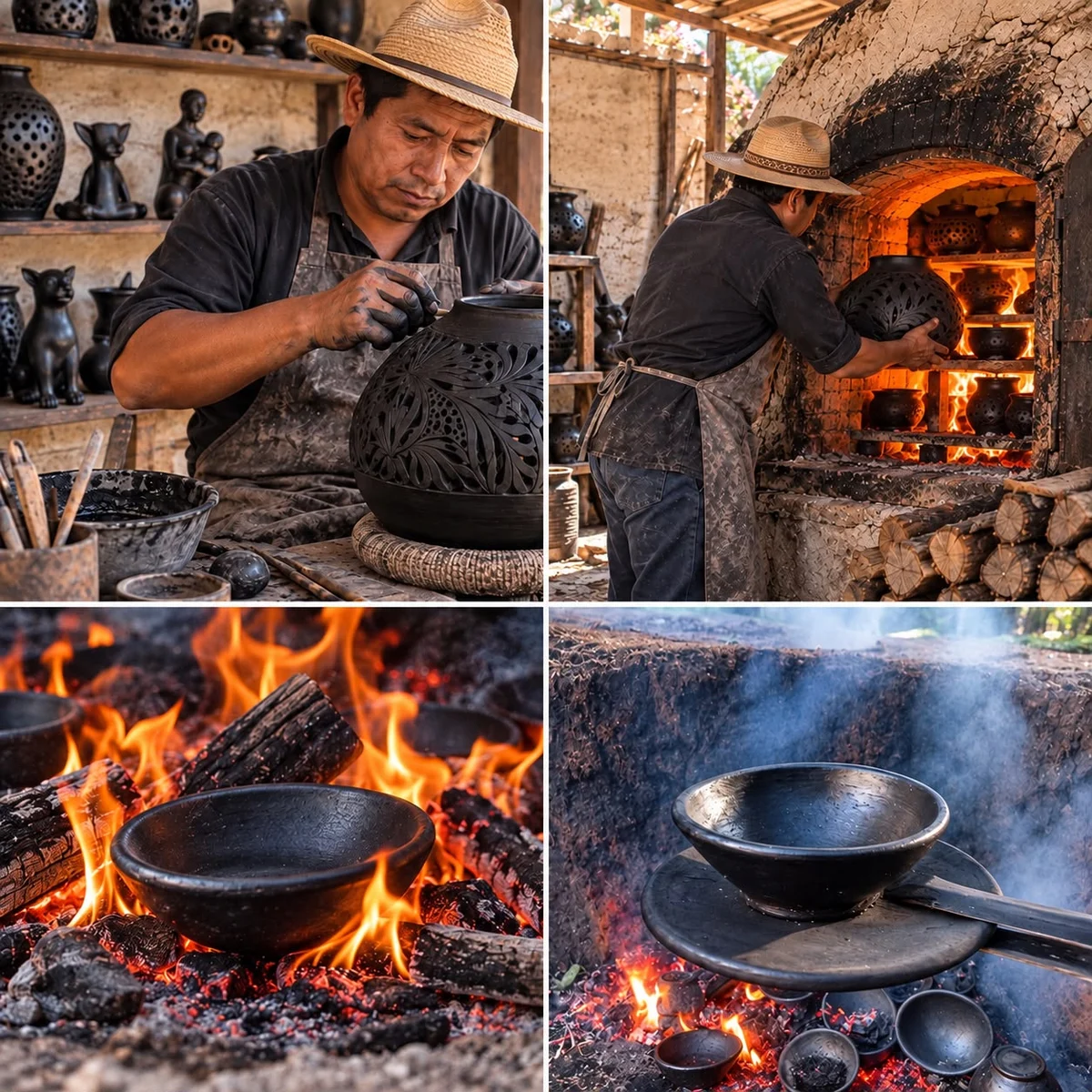
Barro Negro, black clay, is one of Mexico's most distinctive ceramic traditions. Its heart is San Bartolo Coyotepec, a Zapotec community in Oaxaca's Central Valleys where pottery has been made for more than 2,500 years, since the days of ancient Monte Albán.

The clay is not born black: it is a gray clay from the region, kneaded by hand and shaped on a simple rotating support. The magic happens in the kiln: when the oxygen supply is restricted, the smoke and carbon transform the ceramic into its deep black, from soft charcoal to an almost metallic, burnished sheen.

For generations the craft has been taught inside families: children grow up watching parents and grandparents prepare the clay, burnish surfaces with a smooth stone, pierce intricate calado patterns and control the fire. One artisan describes the craft simply as the inheritance her grandmother left her family.

What began as everyday pottery, cántaros and ollas for water and cooking, evolved during the 20th century into decorative and artistic work recognized worldwide: vases, lamps, sculptures and pierced vessels whose patterns let the light pass through the clay. Earth, fire, family and cultural continuity, reimagined by each new generation.

The Art of Woodworking

The Art of Woodworking

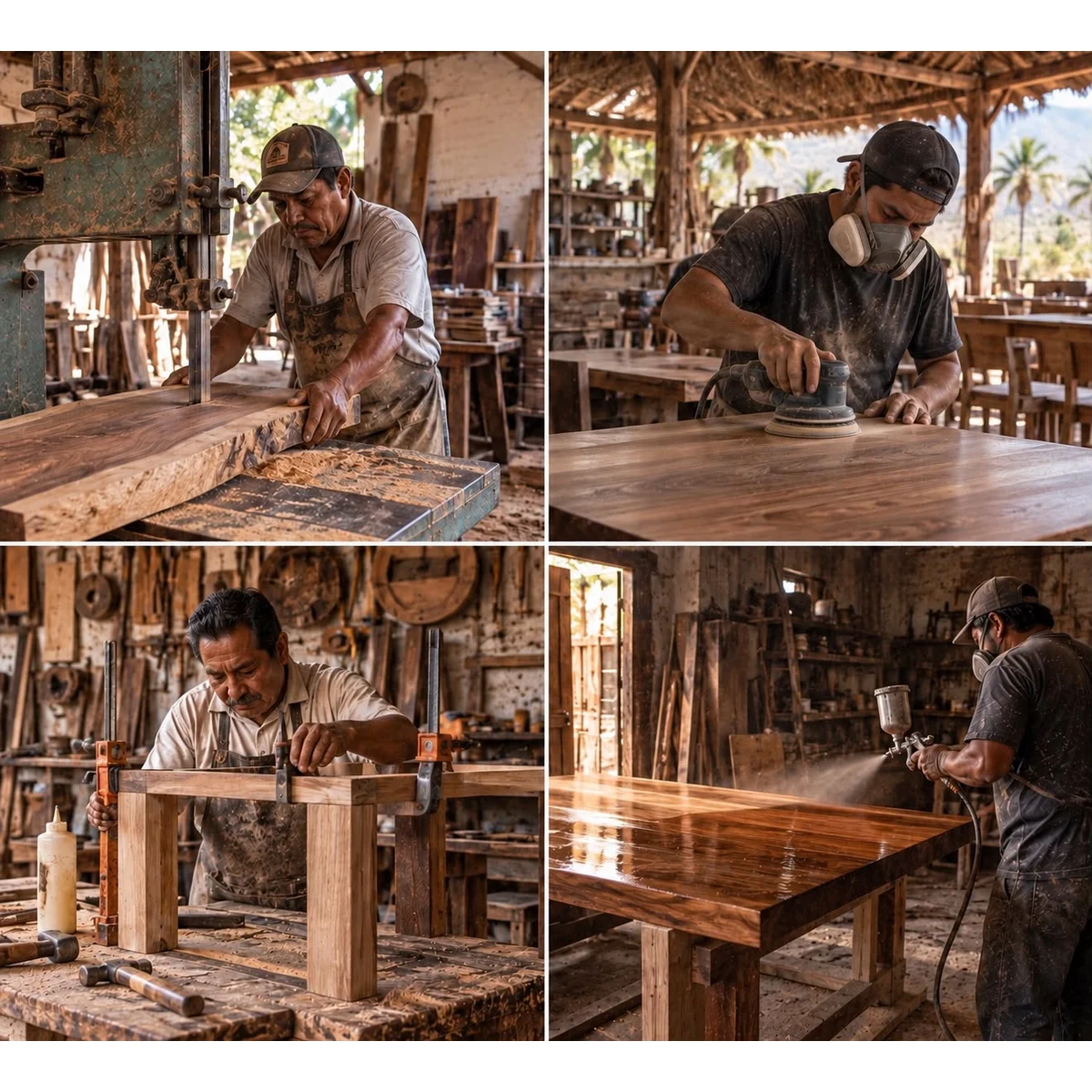
Woodworking in Mexico is a craft shaped by centuries of Indigenous knowledge, Spanish influence, regional materials and family tradition. Long before the Spanish arrived, native cultures worked wood into tools, masks, sculpture and household objects; colonial joinery expanded the craft into furniture, doors, cabinetry and architectural carving.

One of its riches is the diversity of woods: pine, cedar, mesquite, sabino, copal, jacaranda, guamúchil and many local species. The process is deeply tactile: selecting and drying the wood, cutting, joining, carving, clamping and long hours of sanding, where traditional hand tools now work alongside band saws and spray finishes.

Michoacán is one of the great woodworking regions, around the Purépecha communities of Lake Pátzcuaro: Erongarícuaro, Tócuaro, Quiroga, Opopeo and Cuanajo, where around 85% of the town works in wooden furniture. Oaxaca's Central Valleys, San Martín Tilcajete and Arrazola, are world-famous for carved copal.

Many workshops are family businesses where children grow up among timber, tools and unfinished furniture, learning to read the grain, sharpen a blade and judge when a surface is ready. The result is furniture that can be modern in proportion while carrying generations of knowledge: a dialogue between the forest, the artisan and the home, made to be touched, used and lived with.

Handwoven Furniture

Handwoven Furniture

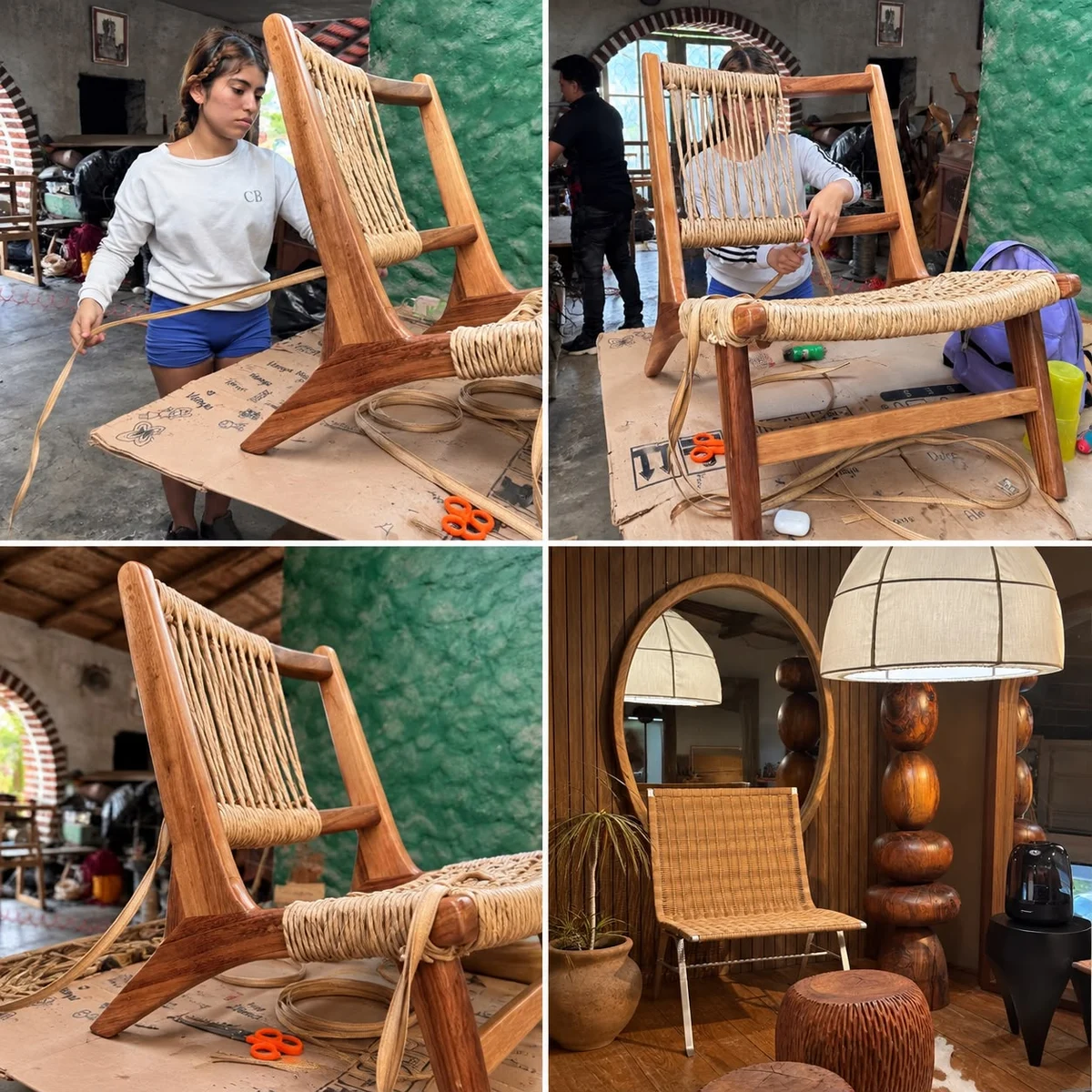
Handwoven furniture in Mexico is a meeting point between carpentry, natural fibers, leatherwork and weaving: a rigid structure, usually wood, transformed by flexible materials that are stretched, wrapped, braided and knotted by hand into seats, backs and panels.

Its roots reach the pre-Hispanic world: the equipal takes its name from the Nahuatl icpalli, seat. Every woven chair requires two crafts: the carpenter builds, sands and finishes the frame; the weaver measures and tensions the fiber, wrap after wrap, until the seat can hold a body in comfort. That tension is the secret, and it takes hours of precise handwork.

The palette of materials follows the Mexican landscape: palm, tule, chuspata, carrizo, otate, ixtle, maguey and leather, joined today by raffia, jute and cotton rope. Jalisco is a great reference, with Zacoalco de Torres as the cradle of the equipal, a family craft with hundreds of families involved; around the lakes of Michoacán, communities weave tule and chuspata, and Opopeo weaves chair seats with Palma Real.

Today these techniques live in dining and lounge chairs, benches, headboards, daybeds and outdoor pieces with clean architectural frames and restrained weaving. Wood gives the piece its structure, fiber gives it texture and flexibility, and the artisan's hands give it its identity.

Natural-Fiber Lighting

Natural-Fiber Lighting

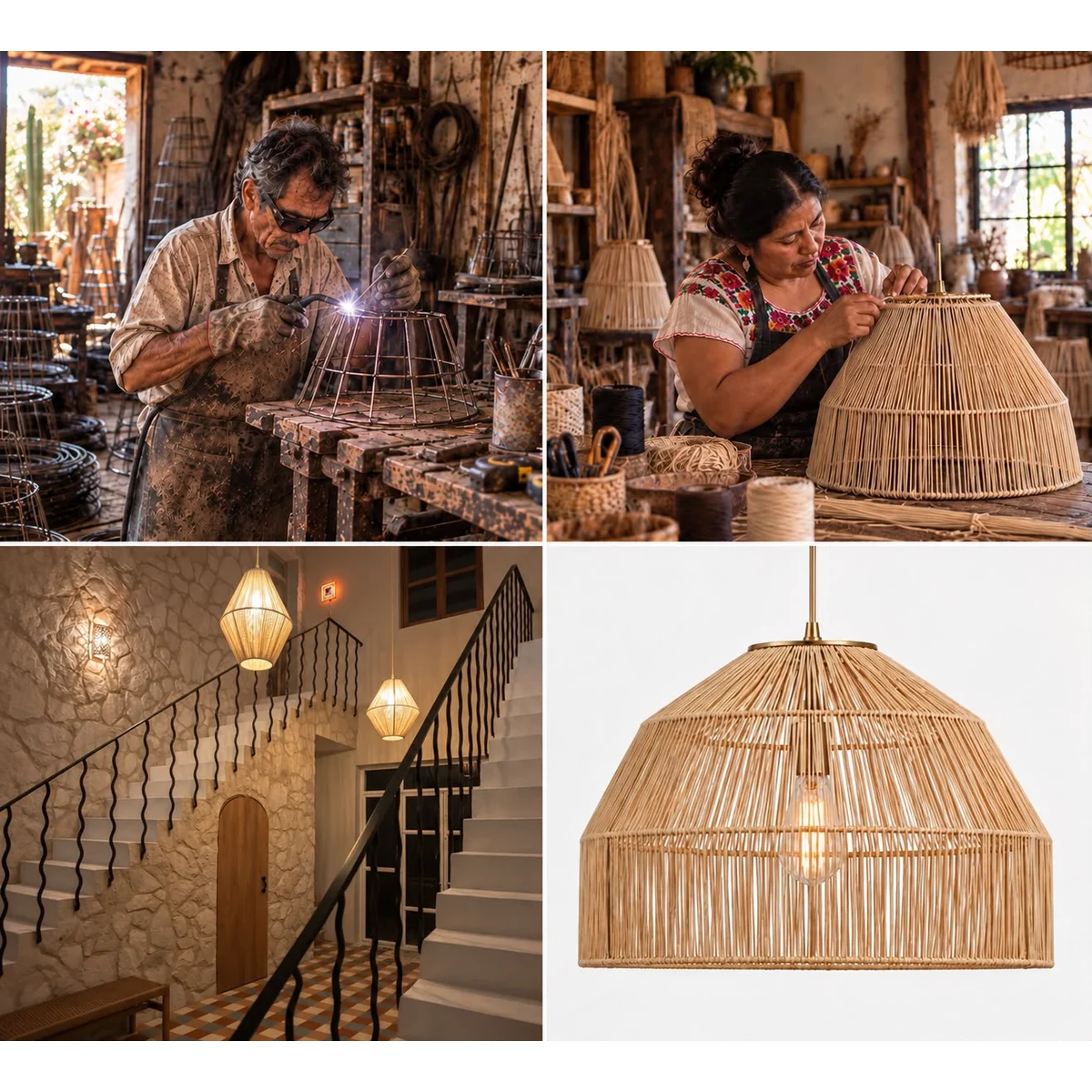
Handwoven lamps are a contemporary expression of a much older Mexican craft: extracting fibers, twisting them into cord, weaving, knotting and stretching them over structures has existed here since pre-Hispanic times, in ixtle, henequén, sisal, palm, tule, carrizo and jipi.

A welded metal skeleton gives the piece its shape; the artisan then works around it, wrapping, stretching and knotting each strand by hand. The tension and spacing of every fiber determine the form and the way light passes through: when lit, the weaving creates transparency, texture, shadow and pattern.

The knowledge goes far beyond weaving: knowing when a plant is ready to harvest, how the fiber is extracted, washed, dried, spun and dyed, and how much tension it can take. In the Valle del Mezquital of Hidalgo, Hñähñu communities have passed a pre-Columbian ixtle tradition from generation to generation; Yucatán and Campeche carry the deep Maya relationship with henequén.

Today those materials, once ropes, hammocks and baskets, become sculptural lighting for contemporary homes, restaurants and hotels, in raw fiber, sand, ivory, tobacco, terracotta and black. Small variations in tension and thickness make each lamp slightly different: a functional light turned into an object that celebrates generations of Mexican knowledge.

The Art of Copper

The Art of Copper

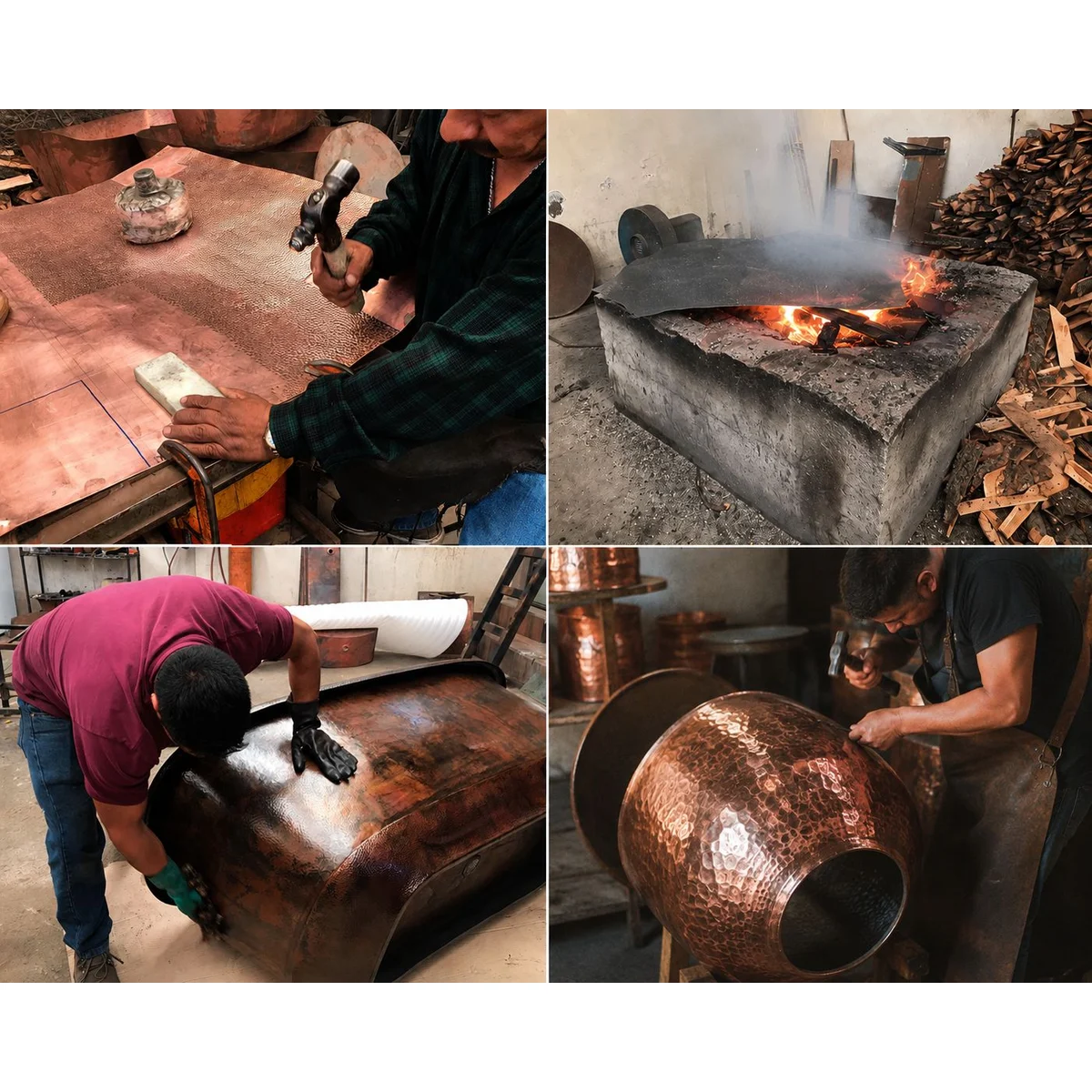
Copper craftsmanship in Mexico is much more than a technique: it is a tradition shaped by fire, strength, patience and generations of skilled hands. Its heart is Santa Clara del Cobre, Michoacán, where the Purépecha people were already smelting and working copper long before the Spanish arrived.

The metal is heated until it softens, then worked again and again by hand. With hammers, anvils, fire and remarkably simple tools, artisans slowly transform copper into vessels, sinks, bathtubs, tables, lighting and sculpture. For large pieces, several artisans work together, heating, hammering, cooling and reheating until the form emerges.

The hammered surface is not decoration: every mark records the process and the hand of its maker. No two handmade pieces are ever alike. Today the workshops remain family-run, and knowledge passes directly from one generation to the next.

It is this union of ancient knowledge and contemporary design that makes Mexican copper so special to us at ARECA. Each piece carries the marks of its maker and a story that began centuries ago in the mountains of Michoacán.

Not simply made in Mexico. Made by hand, shaped by tradition, and created to last.